
Actual Cash Value vs. Replacement Cost: What’s the Difference on Your Home Policy?
When you buy homeowners insurance, one of the most important decisions you’ll make has nothing to do with your deductible or your liability limits. It has to do with how your insurance company will pay you if something goes wrong.
Two words show up in almost every homeowners policy: actual cash value and replacement cost. They sound similar. They are not. And choosing the wrong one could leave you paying thousands of dollars out of pocket after a claim, even if you’re fully insured on paper.
Here’s what each one means and how to know which makes more sense for your home.
What Is Actual Cash Value?
Actual cash value, often abbreviated as ACV, pays you what your property was worth at the time of the loss, not what it costs to replace it.
That difference matters because of depreciation. Everything in your home loses value over time, including your roof, your appliances, your flooring, and your personal belongings. When an ACV policy pays a claim, the insurance company factors in how old and worn those items were before calculating your payout.
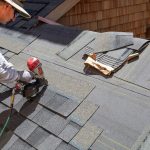
Here’s a simple example. Say a hailstorm damages your roof, and the cost to put on a new roof is $12,000. Your roof was 10 years old and had a lifespan of about 20 years. Under an actual cash value policy, you might receive $6,000, because the roof was already halfway through its useful life. You would be responsible for the remaining $6,000 on top of your deductible.
ACV policies typically come with lower premiums, which makes them appealing at first glance. But when a major claim happens, the gap between what you receive and what you actually need to spend can be significant.
What Is Replacement Cost?
Replacement cost coverage pays what it actually costs to repair or replace the damaged property with something of similar kind and quality at today’s prices, without any deduction for depreciation.
Using the same roof example, a replacement cost policy would pay the full $12,000 to put on a new roof, minus your deductible. You get a new roof. The insurance company absorbs the cost of the years your old roof had already been on the house.
Replacement cost policies carry higher premiums than ACV policies, but for most homeowners they represent significantly better value. The whole point of homeowners insurance is to get you back to where you were before the loss. Replacement cost coverage actually does that.
How Depreciation Works
Depreciation is calculated based on the age, condition, and expected lifespan of the item being replaced. Insurance companies use standard depreciation schedules, and the results can be surprising.
A 15-year-old HVAC system, a kitchen appliance from the early 2000s, or carpet that has been down for a decade will all be heavily depreciated under an ACV policy. In a large claim involving multiple systems or a significant portion of your home’s contents, those depreciation deductions add up fast.
With replacement cost coverage, depreciation is not part of the equation. You are paid based on what it costs to replace the item today, not what it was worth yesterday.
Does Depreciation Apply to Your Home’s Structure and Your Belongings Separately?
Yes, and this is where a lot of homeowners get caught off guard.
Most standard homeowners policies apply replacement cost coverage to the dwelling, meaning the structure of your home itself, but default to actual cash value for personal property, the contents inside. That means your TV, your furniture, your clothing, and your appliances may all be subject to depreciation even if your house itself is covered at replacement cost.
If protecting your belongings matters to you, which it should, ask your agent specifically whether personal property replacement cost coverage is included or available as an add-on. It usually is, and the additional cost is modest compared to what you would recover in a significant claim.
Which One Is Right for You?
For most homeowners, replacement cost coverage is the stronger choice. Here is a simple way to think about it.
If your home was destroyed tomorrow and you had to rebuild it and replace everything inside, could you cover the gap between what an ACV policy would pay and what it would actually cost? When you need to buy everything like new clothes, furniture, electronics, appliances, you’re stuck covering the difference out of pocket. There are no “discounts” after a total loss; you pay full retail. For most people, that gap runs into tens of thousands of dollars. Replacement cost coverage closes that gap.
ACV coverage can make sense in specific situations, such as a rental property where you are less concerned about the value of the contents, or a home that is already fully paid off and where keeping premiums low is the priority. But as a general rule, paying a little more now for replacement cost coverage is far less painful than discovering the shortfall after a major loss.
A Few Things Worth Asking Your Agent
Before you assume you know what your policy covers, it is worth having a direct conversation. Here are a few questions to bring up:
Does my policy cover my home’s structure at replacement cost or actual cash value? What about my personal belongings?
Is there a coverage limit on my dwelling that might leave me underinsured if construction costs have risen since my policy was written?
Are there any categories of personal property, such as jewelry, electronics, or collectibles, that have their own separate limits?
If I wanted to add personal property replacement cost coverage, what would that change about my premium?
The answers matter more than most people realize until they are standing in a damaged home trying to figure out what comes next.
Frequently Asked Questions About Actual Cash Value and Replacement Cost
What is the main difference between actual cash value and replacement cost homeowners insurance?
Actual cash value pays you what your property was worth at the time of the loss, with depreciation factored in. Replacement cost pays what it actually costs to repair or replace the damaged property at today’s prices, with no depreciation deducted. The gap between those two numbers can be substantial, especially on older homes or aging systems like a roof or HVAC.
Is replacement cost coverage always worth the higher premium?
For most homeowners, yes. The difference in premium between ACV and replacement cost is usually modest compared to the out-of-pocket exposure you take on with an ACV policy after a major claim. If your roof, appliances, or personal belongings are more than a few years old, depreciation deductions can easily run into thousands of dollars.
Does replacement cost coverage apply to my personal belongings or just the house?
It depends on your policy. Many standard homeowners policies cover the dwelling structure at replacement cost but default to actual cash value for personal property. That means your furniture, electronics, clothing, and appliances may be subject to depreciation even if the house itself is not. Ask your agent specifically whether personal property replacement cost coverage is included or needs to be added.
How does an insurance company calculate depreciation on a claim?
Depreciation is based on the age, condition, and expected lifespan of the item being replaced. Insurance companies use standard depreciation schedules for common items like roofing materials, appliances, flooring, and electronics. An item that is halfway through its expected lifespan may only be valued at half its replacement cost under an ACV policy.
Can I switch from actual cash value to replacement cost on my existing policy?
In most cases, yes. Replacement cost coverage can often be added or upgraded on an existing homeowners policy. Your premium will adjust, but the coverage difference is significant. If you are not sure what your current policy provides, a quick review with your agent can clarify what you have and what it would cost to change it.
What happens if my replacement cost coverage limit is lower than what it actually costs to rebuild my home?
This is called being underinsured, and it is more common than most homeowners realize, especially as construction costs have risen in recent years. If your dwelling coverage limit is lower than your home’s actual rebuild cost, you may not receive the full amount needed to restore your home even with replacement cost coverage. It is worth revisiting your coverage limit periodically to make sure it reflects current building costs in your area.
Don’t Wait Until You’re Filing a Claim to Find Out
Actual cash value and replacement cost are not just policy terms. They determine how much money you actually receive when you need your insurance to come through. Understanding the difference before a claim happens is one of the most practical things a homeowner can do.
If you are not sure which type of coverage you have or whether your current limits are keeping up with rising construction costs, the agents at The Resource Center in Springfield and Branson are glad to walk you through it. A quick 15- minute policy review can mean the difference between peace of mind and unexpected expenses.
Contact The Resource Center Today